
If you’re reading this, you’re probably at the point where running your own warehouse, packing your own orders, or having your manufacturer drop-ship is becoming a bottleneck. This is the guide we wish existed when we started Hermeslines — written without the corporate fluff, with real numbers, and with honest tradeoffs.
By the end you’ll know what a 3PL actually does, how pricing actually works, what to ask before signing a contract, and how to spot the red flags. We run a 3PL out of Cleveland, Ohio and Denmark, so we have skin in the game — we’ll flag where we have an opinion and let you decide.
What a 3PL Actually Is
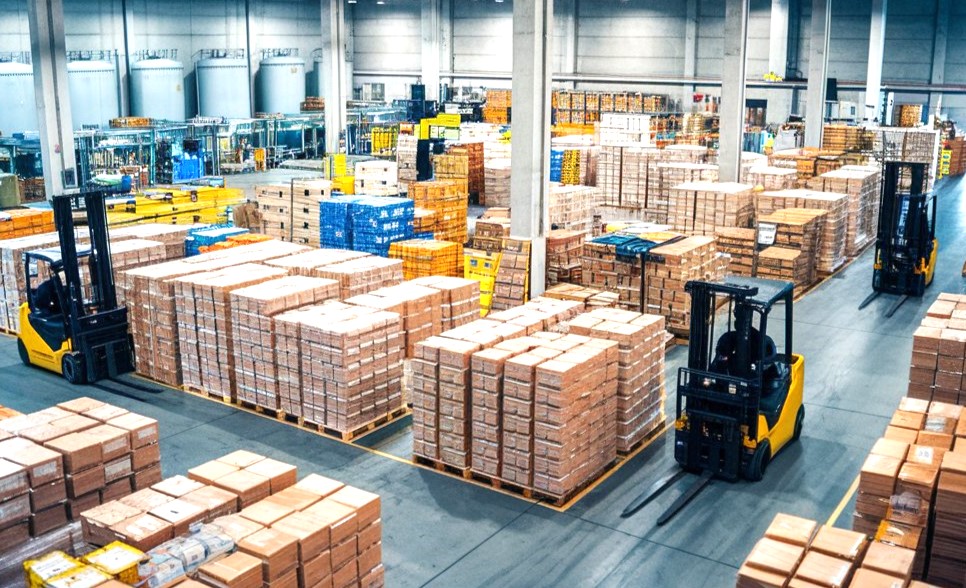
A third-party logistics provider (3PL) is a company you pay to handle the physical side of getting products from your supplier to your customer. That usually means:
- Receiving inventory from your manufacturer or supplier
- Storing it in a warehouse
- Picking and packing orders when customers buy
- Shipping via UPS, USPS, FedEx, DHL, or similar carriers
- Processing returns when customers send things back
Some 3PLs also handle Amazon FBA prep, kitting, custom packaging, photography, B2B retailer prep, and freight forwarding. Hermeslines does all of these. Others specialize narrowly.
One thing worth getting straight: a 3PL is not a shipping carrier. We don’t drive trucks or fly planes. We hand your packages to UPS, USPS, FedEx, etc. The “logistics” part is everything that happens before the carrier picks up.
When You’re Actually Ready for a 3PL
Honest answer: probably later than you think, but not by much.
Signs you’re ready:
- You’re spending more than 10 hours a week on fulfillment
- Packing orders is the reason you can’t focus on marketing, product, or sales
- You’re getting customer complaints about shipping speed and you can’t fix it from one location
- You’re hitting 100+ orders a month and growing
- You want to expand to a new region (US, EU) and don’t want to set up your own warehouse there
- You’re selling on Amazon and need FBA prep done
Signs you’re probably not ready yet:
- You’re doing fewer than 20 orders a month and they take you less than an hour total
- Your margins are so thin that any added cost kills the unit economics
- You’re still figuring out product-market fit and your SKUs are changing constantly
The wrong reason to hire a 3PL is because you think it’ll make you “look like a real business.” It won’t. Your customers don’t know who packed their order. The right reasons are time, geographic reach, and operational scale.
How 3PL Pricing Actually Works
This is where most 3PL articles go vague. We’ll be specific because the whole point of Hermeslines is published pricing — you can check our rate card against everything below.
3PLs typically charge for five things:
1. Receiving (inbound)
What it costs to unload your shipment from a truck, count it, and put it on a shelf. Usually billed per pallet (flat fee) or per carton (weight-based). Hermeslines is $10 per pallet flat, or $0.99–$6.95 per carton by weight. Industry range: $25–$50 per pallet at the larger 3PLs, often with hourly labor charges layered on top.
2. Storage
What it costs to keep your inventory in the warehouse. Usually billed monthly, per pallet, per cubic foot, per shelf, or per bin. Hermeslines is $13.01–$15.99 per pallet per month, scaling down as your volume grows.
3. Pick and pack (fulfillment)
What it costs to grab your product off the shelf, put it in a box, and prepare it for shipping. This is the per-order cost. Hermeslines starts at $0.99 for pre-packed orders under 1.1 lb, $1.45 with your branded packaging, $1.57 with our standard packaging. Industry range: $2.50–$4.50 per order at the larger 3PLs, often with extra-item fees on top.
4. Shipping (labels)
What the carrier (UPS, USPS, etc.) charges to actually move the package. Most 3PLs doesn’t make money on this — they pass through the carrier rate, sometimes with a small markup. Most 3PLs get discounted rates from carriers because of volume; you benefit from that even at low volumes.
5. Returns
What it costs to receive, inspect, and re-shelve a return. Hermeslines is $0.99–$6.95 per return by incoming weight, plus $0.20 per item to restock.
Watch out for these hidden costs
- Monthly minimums. Many 3PLs require a minimum spend per month — typically $250–$500. If you don’t hit it, you’re billed the minimum anyway. Hermeslines has no monthly minimum, which is rare in the industry.
- Setup or onboarding fees. Often $300–$1,500 to get started. Hermeslines is free for self-service onboarding, $60/hr if you need hands-on help.
- Account management fees. Some 3PLs charge a monthly “platform fee” or “account fee” on top of usage.
- Manual unit count. Most 3PLs (Hermeslines included) record receiving quantities from your packing list rather than counting each unit. If you want a full manual count, expect to pay hourly for it. We’re transparent about this on our rate card; many 3PLs aren’t.
- Long contract lock-ins. Watch for 12-month minimum contracts. Month-to-month is much more common today and you should expect it.
How to Pick a 3PL
Here’s the framework we’d use if we were shopping for a 3PL ourselves:
1. Get the rate card up front
If a 3PL won’t show you pricing without a sales call, that’s a signal. It usually means their pricing is custom-quoted (read: based on what they think you’ll pay) and isn’t competitive at low volumes. We audited five major US 3PLs on this — most still hide rates behind quote forms. Worth knowing before you spend a week on sales calls.
2. Match warehouse location to your customer base
If 80% of your customers are on the East Coast, a Midwest or East Coast warehouse will hit them in 1–2 days ground. If you’re heavily West Coast, you want a West Coast warehouse or a multi-warehouse network. Hermeslines runs from Cleveland, Ohio, which covers about 70% of the US population in 2 business days ground. The West Coast takes 4 days from Cleveland — be honest with yourself about whether that matters for your brand.
3. Check the volume floor
Many 3PLs reject brands under a certain order volume. Major 3PLs often exclude smaller brands. If you’re under 500 orders a month, ask up front whether they’ll take you and what the all-in monthly cost looks like. At Hermeslines, we have no volume floor, which is part of why this guide exists in this form.
4. Check integrations
The 3PL needs to connect to your sales channels (Shopify, WooCommerce, Amazon, Etsy, eBay, your own custom store). Confirm specifically — not “we integrate with most platforms” but “yes, we have a direct Shopify integration.”
5. Ask about the offboarding process
This sounds cynical but it’s the most overlooked question. How fast can you leave? What’s the inventory transfer process if you do? Are there exit fees? A 3PL confident in their service won’t flinch at this question. One that hesitates is probably hard to leave.
6. Get a real person on the phone
You’re trusting this company with your inventory. If their sales process is all chatbots and you can’t reach a human in 24 hours, that’s how their customer service might work too.
International Sellers, Read This
If you’re based outside the US — UK, EU, Australia, Asia — and want to fulfill US orders, most US 3PLs will be a pain to onboard. They’ll ask for a US bank account, a US entity, or US-based references you don’t have. Hermeslines specifically built around this: we onboard international brands routinely. If you’ve been turned away by other US 3PLs, that’s the gap we exist to fill.
Same goes the other direction — if you’re a US brand wanting to fulfill EU orders, our Denmark facility serves Northern Europe, Germany, Benelux, and most of Western Europe at reasonable transit times. It’s smaller than our US operation but fully operational.
Common 3PL Myths
“Big 3PLs are cheaper because of scale.” Often the opposite. Large 3PLs have high overhead, expensive software, and large sales teams — costs that get passed to you. Smaller, leaner 3PLs frequently undercut them at low-to-mid volumes.
“You need 2-day shipping everywhere to compete.” You don’t. 2-day is table stakes for Amazon FBA sellers, but DTC customers buying from independent brands tolerate 3-5 day shipping if the product is good and the communication is clear. Don’t pay 2x in fulfillment fees to chase a delivery speed your customers haven’t asked for.
“All 3PLs are basically the same.” Pricing varies by 2-3x for the same service. Onboarding speed varies by weeks. Customer support varies from “a real person who knows your account” to “submit a ticket and wait 72 hours.” The 3PL you pick matters.
Next Steps
If you want to see what working with Hermeslines actually costs, our pricing page has the full 2026 rate card with no email gate.
If you want to see how we compare to specific competitors, we have detailed comparison pages with worked-example cost calculations:
And if you want to talk to a real human about whether we’re a fit for your brand, get in touch here. No sales gate, no automated follow-ups — just a conversation.